
Enterprise Risk Architecture
What is a Captive Insurance Structure?
A captive insurance structure is a highly specialized, federally recognized corporate structure that allows profitable enterprises to create their own micro-insurance company. Instead of paying non-refundable premiums to a commercial carrier for predictable, low-frequency risks, your company pays those premiums to its own private reserve. Your traditional commercial policy remains firmly in place as an outer shield for catastrophic, worst-case scenarios, while your private reserve retains the underwriting profit that would otherwise go to a commercial carrier, provided your captive is structured and operated primarily to manage real, insurable risk..
Moving beyond passive risk transfer to capture balance-sheet efficiency with a private reserve.
A captive structure does not replace your commercial insurance, it fills in gaps and allows you to retain your own underwriting profit.
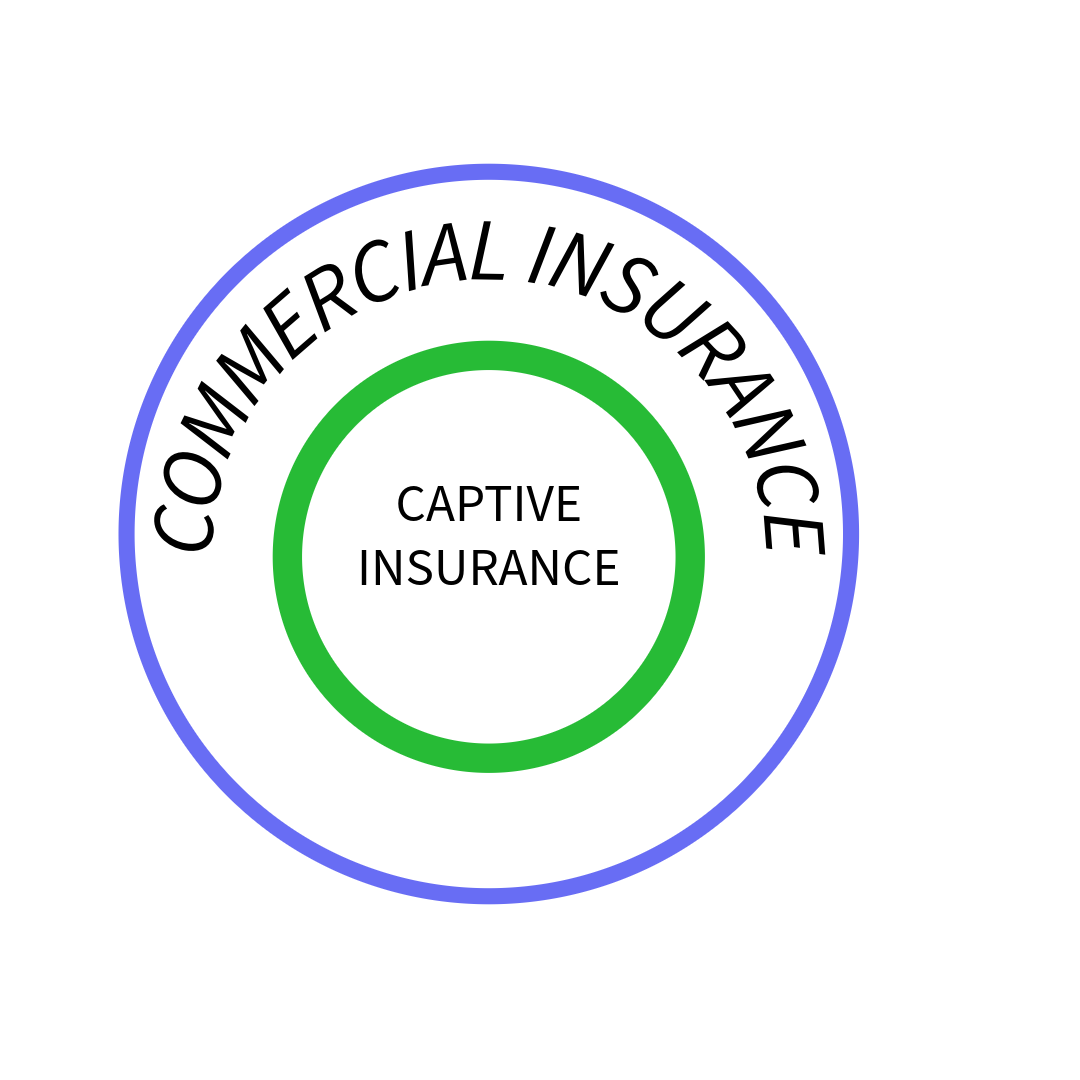
A captive insurance structure is a standalone entity that your firm owns. The captive supplements your current commercial insurance policy.
Why Establish a Captive for Your Firm?
Your enterprise currently exists in a risk pool defined by your competition. Let’s say you’re a mid-market manufacturing firm. Your commercial premiums are heavily weighed against the collective claims history of your industry peers. When your firm executes a highly disciplined, safe year with minimal claims, but a competitor in your pool does the opposite, the financial reality is simple: your unspent premiums directly subsidize your competitors’ poor performance. A captive structure fundamentally breaks this cycle by creating a custom architecture where your organization is the only risk inside your pool.
Insure Risks That Cookie-Cutter Commercial Policies Cannot
One of the most critical structural limitations of traditional insurance is the rise of the "corporate exclusion." Over the past decade, standard commercial carriers have aggressively narrowed their policies, leaving mid-market enterprises exposed to severe, uninsurable operational vulnerabilities. A captive insurance structure solves this systemic problem by acting as a highly customized underwriting vehicle. Instead of being forced to accept rigid, off-the-shelf commercial exclusions, your organization can use its captive structure to formally underwrite and pre-fund the exact, specialized risks that traditional commercial lines refuse to cover.
These risks include, but are not limited to:
Supply chain disruptions
Loss of key client(s)
Pandemics
Recalls
Warranty programs
Retain Your Own Underwriting Profit
In the traditional commercial market, insurance is a pure sunk cost. When your organization manages operations flawlessly and ends the year with minimal or zero claims, the unused premium dollars do not return to your balance sheet—they become permanent profit margins for the commercial carrier. A captive insurance structure fundamentally flips this dynamic. By establishing your own underwriting entity, the premium surplus that would normally be pocketed by insurance companies is instead legally retained inside your own structure, transforming a standard operating expense into a predictable corporate asset. How exactly can this benefit your firm?
Balance Sheet Accumulation: Unused premium surplus remains directly inside your corporate ecosystem rather than permanently leaving the company.
Compounding Reserve Growth: Retained underwriting profits can be invested over a multi-year horizon, allowing capital that would otherwise be a sunk expense to grow in support of your firm's risk reserves.
Dividend Flexibility: Because your organization fully owns the captive insurance structure, surpluses beyond required risk reserves can eventually be distributed back to the parent company or its shareholders as dividends.
Enhanced Cash Flow Control: Retaining your underwriting profit gives your executive team greater flexibility in how reserves are deployed to support the firm's risk management needs.
Tax Efficiencies of a Properly Structured Captive
From a corporate finance perspective, a properly engineered captive insurance structure offers highly efficient tax treatment on retained premiums. However, regulatory frameworks are explicit: a captive insurance structure must never exist solely as a tax shelter. For these financial advantages to be legally realized, the structure must be built on a foundation of true economic substance, legitimate risk distribution, and arm's-length underwriting practices. When your captive is meticulously established and managed by qualified compliance and actuarial experts, the tax code rewards the enterprise for taking formal, structured ownership of its operational risks.
Core Financial & Tax Advantages:
Accelerated Deductions: Premiums paid by the parent company to the captive insurance structure are generally treated as ordinary, fully deductible business expenses, just like standard commercial insurance.
Tax-Deferred Reserve Growth: Underwriting surpluses retained inside the captive can often accumulate and grow on a tax-advantaged basis, maximizing the compounding effect of the reserve assets. Smaller captives meeting specific IRS eligibility requirements may qualify for additional favorable tax elections on underwriting income. Your captive manager and independent tax advisor will confirm whether your structure qualifies and ensure all applicable reporting requirements are met.
Asset Insulation & Protection: Because the captive insurance structure operates as a distinct legal entity, the accumulated surplus capital is heavily insulated from the operational liabilities and general creditors of the parent company.
Implementation and Support
Deploying a captive insurance structure requires precision engineering and absolute regulatory compliance. To deliver a seamless, turnkey experience, our firm integrates directly with Captive Consultants, an elite structural engineering firm specializing in captive design, actuarial modeling, and ongoing compliance.
Together, we guide your enterprise through a structured, four-phase lifecycle designed to minimize operational friction and maximize balance-sheet efficiency.
Phase 1: Actuarial Risk Assessment & Feasibility: Data Discovery.
Before any structure is built, we conduct a deep-dive data analysis of your organization's historical loss runs and operational profile. Captive Consultants performs a rigorous risk assessment to identify specialized coverages, optimize underwriting amounts, and deliver a comprehensive feasibility report modeling your potential financial returns.
Phase 2: Architecture & Structural Execution: Deployment.
Once the data validates the strategy, the blueprint is put into action. Captive Consultants handles the preparation of all formal plan documents, coordinates customized risk assessments, and secures the necessary regulatory and transaction approvals required to legally birth your independent insurance entity.
Phase 3: Ongoing Operations & Advisory: Turnkey Management.
A captive is a living corporate entity. Our partners handle the day-to-day heavy lifting, which includes continuously monitoring compliance with captive rules and guidelines, providing ongoing executive consulting, and overseeing institutional claims services if an internal loss ever occurs.
Phase 4: Institutional Filings & Regulatory Compliance: Governance.
To protect the integrity of your tax and corporate structures, Captive Consultants manages the entire annual compliance architecture. This includes managing specialized corporate documentation (such as meeting minutes and annual renewals) and executing all mandatory regulatory filings (including Form 8886, Form 1099-DIV, and the captive's annual corporate tax returns).
Capital Stewardship
While our partners at Captive Consultants engineer the structure and maintain the strict regulatory parameters of your captive, our firm takes the helm as the institutional asset manager.
Managing the reserves inside a captive insurance structure requires a highly specialized, fiduciary approach. These assets cannot be treated like a standard personal brokerage account or a traditional corporate cash reserve. Every investment decision must balance the captive's primary obligation—maintaining total liquidity to pay claims—with the long-term goal of maximizing compounding growth.
To achieve this safely, we deploy a disciplined, phased investment lifecycle.
Foundation & Capital Preservation (Year 1)
The first twelve months of a captive insurance structure are its most vulnerable. Because the entity is brand new, the underwriting asset base is still accumulating and has not yet built a multi-year financial cushion.
The Investment Mandate: Absolute Capital Preservation & Liquidity.
The Execution Strategy: During Year 1, we insulate 100% of the retained premiums into ultra-liquid, short-duration institutional vehicles. We utilize strategies such as short-term U.S. Treasuries, high-yield cash equivalents, and prime money market funds. This ultra-defensive posture guarantees that if a high-frequency claim occurs early in the life of the captive, the entity can settle it instantly without disrupting the parent company's operational cash flow.
Managed Growth and Yield Acceleration (Years 2+)
Once the captive successfully navigates its initial year, the financial architecture shifts. As historical claims baselines stabilize and Year 2 premiums enter the structure, a permanent capital surplus begins to form.
The Investment Mandate: Risk-Adjusted Capital Growth.
The Execution Strategy: With a foundational cash cushion securely established in the core, we strategically expand the captive's investment horizon. We introduce highly measured, diversified growth assets designed to capture yield and leverage compound interest.
The Unified Executive Advisory
By separating the structural management from the capital management, your organization gets the best of both worlds. Captive Consultants keeps your structure compliant; our firm manages your captive’s reserve capital under a disciplined Investment Policy Statement (IPS) tailored to your firm’s specific risk profile.
Frequently Asked Questions
Who actually owns and controls the captive insurance structure?
Answer: Your organization or its designated shareholders own 100% of the equity in the captive insurance structure. It operates as a completely independent corporate entity. While our trusted partners at Captive Consultants handle the day-to-day administrative management and regulatory compliance, and our firm manages the asset reserves, all ultimate corporate governance and ownership rights remain entirely in your hands.
Is a captive insurance structure considered an aggressive tax shelter?
Answer: Absolutely not. While a captive does have tax benefits, it is a legitimate, federally recognized risk-management framework. To fully realize these tax benefits, the structure must be built on true economic substance, genuine risk distribution, and fair-market underwriting practices. This is precisely why we partner with Captive Consultants—to ensure the entity strictly satisfies IRS guidelines and operates with total compliance.
How does the claims process work if our company experiences a loss?
Answer: If an operational loss occurs that falls under the specialized coverage written by your captive, a claim is formally filed against the structure. Captive Consultants manages the entire institutional claims administration process to ensure regulatory guidelines are met, while our firm ensures the necessary liquidity is available within the asset reserve to settle the claim seamlessly without impacting the parent company’s cash flow.
Can the accumulated profit surplus inside the captive be accessed by the parent company?
Answer: Yes, through formal corporate dividend distributions to the captive’s owners or shareholders. However, because the captive is a regulated insurance company, any profit distributions are subject to domicile regulatory guidelines and capital adequacy testing. This ensures that loss reserves remain fully protected to cover potential claims before mature underwriting profits and investment yields are returned to ownership.
What happens if our company has an unusually high claims year?
Answer: This is where the dual-layered target ring architecture protects you. Your captive is designed to underwrite predictable, lower-frequency operational risks. Your primary commercial policy remains firmly in place as an outer perimeter defense. For catastrophic or worst-case scenarios, your traditional commercial lines or direct wholesale reinsurance layers trigger, ensuring your corporate parent and your captive are never exposed to existential financial ruin.
How much operational scale is required to justify setting up a captive?
Answer: Because establishing a captive insurance structure involves fixed actuarial, legal, and regulatory setup costs, it requires a certain baseline of financial scale to be mathematically viable. Generally, organizations experiencing significant, consistent profitability and paying substantial annual commercial insurance premiums derive the highest utility from this framework. A complimentary data discovery and feasibility assessment with Captive Consultants will definitively confirm if your metrics justify the structure.
Initiating a Feasibility Assessment
If your organization has the operational scale to transition away from traditional commercial insurance models, the next step is a structured data review.
Contact our private executive line directly. If your initial operational metrics align with the strategy, I will personally coordinate a high-level briefing connecting you and your executive team directly with our specialized structural engineers at Captive Consultants to map out a formal feasibility study.
Direct Line: (419) 210-8022
All figures, and calculations are for illustrative purposes only and do not represent actual outcomes for any client. They should not be relied upon as such. Tax savings should not be the main reason for any transaction. The IRS may deny deductions for transactions primarily motivated by tax benefits and could deem a captive formed mainly for tax purposes as invalid. Captives should be established primarily for risk management and asset protection, with clear documentation supporting non-tax reasons for their creation. In 2016, the IRS issued Notice 2016-66, labeling certain captive insurance transactions as “transactions of interest,” requiring disclosure of specific details to the IRS. Consult your independent tax advisor to understand how Notice 2016-66 may impact any captive insurance transactions you have or are considering. Captive Consultants and Oregon Insurance and Financial Services are not affiliated.